
Fatty liver means extra fat has built up inside your liver. For most people it is found early, causes no pain, and can improve with steady changes to weight, food and activity. At Ashtang Ayurved, our doctors combine these proven steps with personalised Ayurvedic care — always alongside your regular doctor, never instead of them.
What is fatty liver?
A healthy liver holds only a little fat. When fat builds up beyond that, doctors call it fatty liver.
The most common type is now called MASLD (metabolic dysfunction-associated steatotic liver disease). It used to be called NAFLD. The new name explains the cause: it is linked to the body’s metabolism — weight, blood sugar, blood pressure and cholesterol. Fatty liver caused mainly by alcohol is a separate condition.
Who is more likely to get it?
You are at higher risk if you have one or more of these:
- Extra weight, especially around the waist
- Type 2 diabetes or prediabetes
- High blood pressure
- High triglycerides or low “good” (HDL) cholesterol
- Very little physical activity
- Regular alcohol use (this adds to the damage)
People of normal weight can get fatty liver too, especially if they have diabetes or carry fat around the belly.
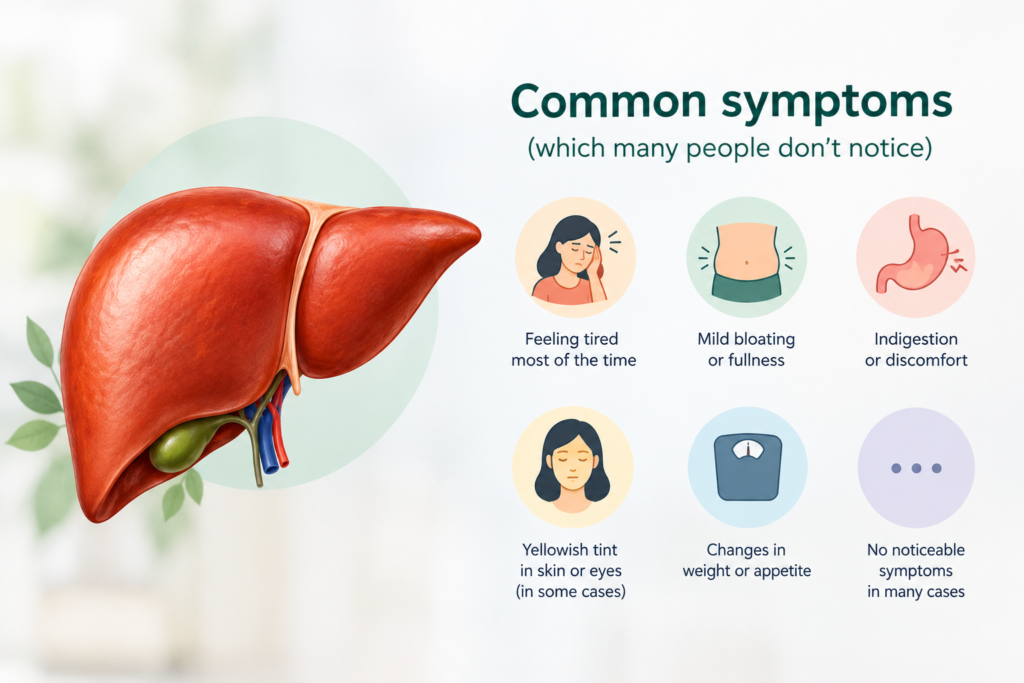
Symptoms: why most people don't notice it
Most people feel nothing. Fatty liver is usually found by chance on an ultrasound or a liver function test (LFT) done for another reason. A few people feel tired or have a dull ache under the right ribs..
Why it still matters
In some people, fat leads to inflammation in the liver. Over years, this can cause scarring (fibrosis). Severe scarring is called cirrhosis. Fatty liver is also linked to a higher risk of heart disease and diabetes. That is why checking for scarring — not just fat — is so important.
When to get urgent medical help
Go to a hospital emergency department straight away if you have:
- Yellow eyes or skin (jaundice)
- A swollen belly or swollen legs
- Vomiting blood, or black, tarry stools
- Confusion or unusual sleepiness
- Severe pain in the abdomen
These can be signs of advanced liver disease. They need emergency care, not Ayurvedic treatment.
How fatty liver is checked
- Health check: weight, waist size, blood pressure and your medical history, including alcohol use.
- Blood tests: liver function test (LFT), blood sugar or HbA1c, and a lipid (cholesterol) profile.
- Ultrasound: shows whether fat is present.
- Scarring check: a simple score called FIB-4, worked out from routine blood tests. If the score is not low, a FibroScan (a painless liver stiffness scan) is the usual next step, with a liver specialist if needed.
Can fatty liver be treated without surgery?
Yes. For most people, fatty liver is managed without any surgery. The main treatment is steady weight loss, better food choices, regular activity, and good control of blood sugar, blood pressure and cholesterol.
European liver guidelines give these targets for people who are overweight:
- Losing 5% of body weight reduces liver fat.
- Losing 7–10% helps calm liver inflammation.
- Losing 10% or more can improve scarring.
For someone who weighs 80 kg, 5% is 4 kg and 10% is 8 kg. Slow, steady loss that you can keep up works better than crash diets.
Can it be cured? Early fatty liver can often improve a great deal, and liver fat can fall back towards normal. But no one can honestly promise a cure. Advanced scarring may not fully reverse. Some people with advanced disease also need medicines prescribed by a liver specialist. Weight-loss (bariatric) surgery is only considered for some people with severe obesity.
Everyday steps that help your liver
- Eat simple home food: more vegetables, dals, whole grains, fruit and a handful of nuts.
- Cut back on sugary drinks, sweets, fried snacks, refined flour (maida) and packaged foods.
- Move more: aim for at least 150 minutes a week of moderate activity — for example, a 30-minute brisk walk on five days.
- Avoid alcohol. If you have scarring, stop completely.
- Sleep well and keep regular meal times.
- Don’t self-treat. Do not start “liver detox” products or herbal powders without asking a doctor.
How Ayurvedic care supports you at Ashtang Ayurved
In Ayurveda, fatty liver is linked to weak digestion (Agni) and an imbalance of Kapha and fat tissue (Meda). These are traditional ideas that guide how our doctors personalise your plan. They are not a replacement for medical tests.
- A personal diet plan (pathya) built around foods you already eat at home
- A daily routine (dinacharya) for meals, sleep and activity
- Yoga and movement guidance suited to your fitness
- Ayurvedic medicines, only when the doctor feels they are suitable for you
- Panchakarma therapies such as Virechana, only after a full assessment
What Ayurveda can and cannot do
We want you to know the limits. Good-quality research has not shown that any herbal or Ayurvedic medicine treats fatty liver on its own, and European guidelines do not recommend herbal supplements for it. Some herbs, including Giloy, have been linked to liver injury in a few people.
So our doctors prescribe only after assessment, check your liver tests during treatment, and keep you on the medicines your physician has prescribed.
Your first visit
- Bring your recent reports (ultrasound, LFT, sugar, cholesterol) and a list of all medicines and supplements.
- Meet our Ayurvedic doctor for a detailed consultation.
- Get any missing tests done, if advised.
- Leave with a written diet, activity and treatment plan.
- Return for follow-ups to track weight, waist and repeat tests. If your results suggest scarring, we will advise you to see a liver specialist.
Frequently asked questions
My ultrasound says “grade 1 fatty liver”. Is that serious?
Grade 1 means a small amount of fat was seen. It is usually an early stage, but it is a useful warning. Ask for a FIB-4 score to check for scarring, and start working on weight and activity now.
Is fatty liver only caused by alcohol?
No. Most fatty liver today is linked to weight, blood sugar, blood pressure and cholesterol, not alcohol. Alcohol does make liver damage worse.
How long does it take to improve?
It depends on your starting point and how much weight you lose. Your doctor will repeat tests over months to track progress. Be cautious of anyone who promises a fixed timeline.
Should I take a liver detox supplement?
Please don’t, unless a qualified doctor prescribes it after checking your reports. Some supplements can harm the liver.
Should I stop my diabetes or cholesterol medicines?
No. Keep taking them as prescribed. Many of them also protect your heart. Only the doctor who prescribed a medicine should change it.
