
Ayurvedic Frozen Shoulder Treatment in Nashik
Frozen shoulder (also called adhesive capsulitis, and known in Ayurveda as Apabahuka) causes pain and stiffness in the shoulder, making it hard to lift or rotate the arm. Simple daily tasks — combing hair, wearing clothes, reaching for a seat belt — become painful. At Ashtang Ayurveda in Nashik, Dr. Pravin Kenge (14+ years’ experience) offers natural Ayurvedic treatment that aims to reduce pain, loosen stiffness and gradually restore free shoulder movement, without surgery.
What Is Frozen Shoulder?
The shoulder joint is wrapped in a soft capsule of tissue. In frozen shoulder, this capsule becomes inflamed, tight and stiff, so the joint slowly loses its range of movement. It is more common between the ages of 40 and 60, in people with diabetes or thyroid issues, and after any period when the arm was kept still (for example after an injury or surgery). It usually develops in three stages:
- Freezing stage: pain slowly increases and the shoulder starts to stiffen.
- Frozen stage: pain may ease a little, but stiffness is at its worst and movement is very limited.
- Thawing stage: movement slowly returns over time.
Common Signs & Symptoms
- Deep, dull or aching pain in the shoulder and upper arm.
- Stiffness that makes it hard to raise the arm or reach behind the back.
- Pain that often feels worse at night and can disturb sleep.
- Trouble with everyday actions like dressing, combing hair or lifting objects.
The Ayurvedic View of Frozen Shoulder (Apabahuka)
Ayurveda links frozen shoulder mainly to an aggravated Vata dosha, which causes dryness, stiffness and pain in the joint, often with some Kapha involvement adding heaviness and restricted movement. Treatment therefore focuses on pacifying Vata, nourishing and lubricating the joint with warm medicated oils, loosening stiffness through herbal fomentation, and gently restoring movement — supported by internal medicines and simple exercises.

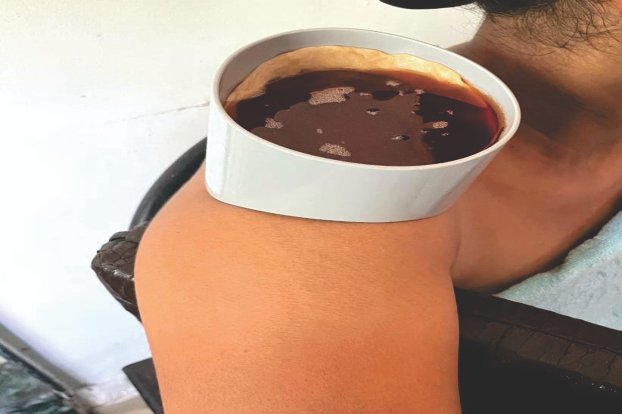
अंसबस्ती ( shoulder joint basti )
Definition
Warm medicated oil is held over the shoulder joint inside a dough ring for a set time. This nourishes and lubricates the joint, calms Vata, and helps reduce pain and stiffness — one of the most effective therapies for frozen shoulder.
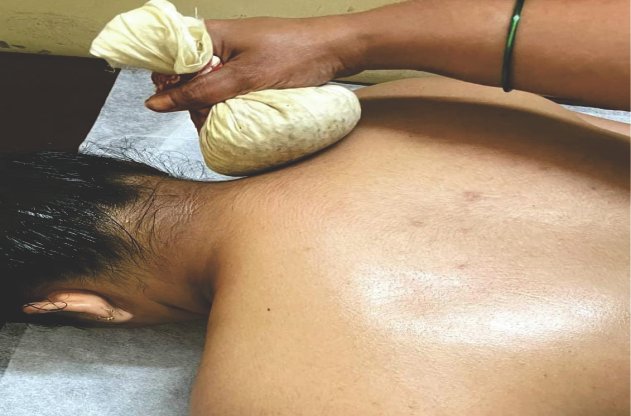
पत्रपोट्टली स्वेद ( Patra-pottali swed)
Definition
Warm bundles (pottali) filled with medicinal leaves such as Nirgundi, Arka and Shigru are pressed over the shoulder to relieve pain, reduce stiffness and improve flexibility. Also helpful for backache, sciatica and general joint pain.
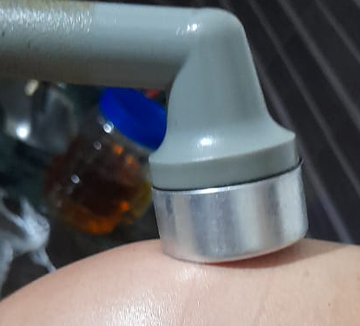
Ultrasonic vibration
Definition
It is a type of hot fomentation over affected area.
Uses
– Relieving pain
– Swelling on joints
– Muscles relaxant
– Nerve stimulation
Accupuncture

Pinda Swedana

Definition
A warm herbal or medicated-rice bundle is used to give soothing heat to the affected muscles, easing pain and relaxing the area.
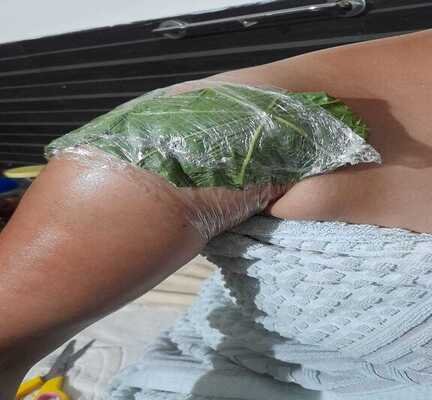
अंस लेप
Definition
A medicated herbal paste is applied over the shoulder to reduce swelling, pain and inflammation.
Supportive Fomentation & Physiotherapy
Gentle hot fomentation, ultrasonic vibration and guided shoulder exercises help relax muscles, ease pain and slowly rebuild movement.
Internal Ayurvedic Medicines
Vata-balancing herbal medicines are given to support healing from within and reduce the chance of the problem returning.
Beyond Frozen Shoulder — These Therapies Also Help
The same range of therapies is also used, under guidance, for backache, sciatica, cervical (neck) pain, general joint stiffness and supportive care in paralysis.
What to Expect — Your Treatment Journey
- Assessment: The doctor examines your shoulder movement and understands your history.
- Personalised plan: A course of therapies and medicines is planned for your stage and severity.
- Treatment: Therapies are done by trained therapists under supervision, along with internal medicines and simple home exercises.
- Follow-up: Progress is reviewed and exercises/diet are adjusted so results last.
Simple Home-Care Tips
- Apply gentle warmth (warm oil or a warm compress) to the shoulder.
- Do gentle stretching within a comfortable, pain-free range — never force it.
- Avoid keeping the arm completely still for long periods.
- Protect the shoulder from cold wind and cold water.
- Follow the exercises and medicines your doctor advises, consistently.
Frequently Asked Questions
Q1. Can frozen shoulder be treated without surgery?
Yes. Most cases can be managed without surgery. Ayurvedic therapies, medicines and gentle exercises aim to reduce pain and stiffness and gradually restore movement naturally.
Q2. How long does Ayurvedic treatment take?
It depends on the stage and severity. Some people improve over a few weeks; longer-standing cases may need a longer course. The doctor will guide you after examining your shoulder.
Q3. Are the therapies painful?
No. Therapies like Ansa Basti and Pottali Swedana use warm oils and herbal heat and are usually soothing and relaxing.
Q4. Is this treatment suitable for diabetic patients?
Frozen shoulder is common in people with diabetes, and Ayurvedic treatment can help. Do inform the doctor about diabetes or any other condition so your care is planned safely.
Q5. Will the problem come back after treatment?
Following the advised exercises, diet and lifestyle after treatment greatly lowers the chance of it returning.
